
July 2026 Topic of the Month: I Thought You Just Made Neon
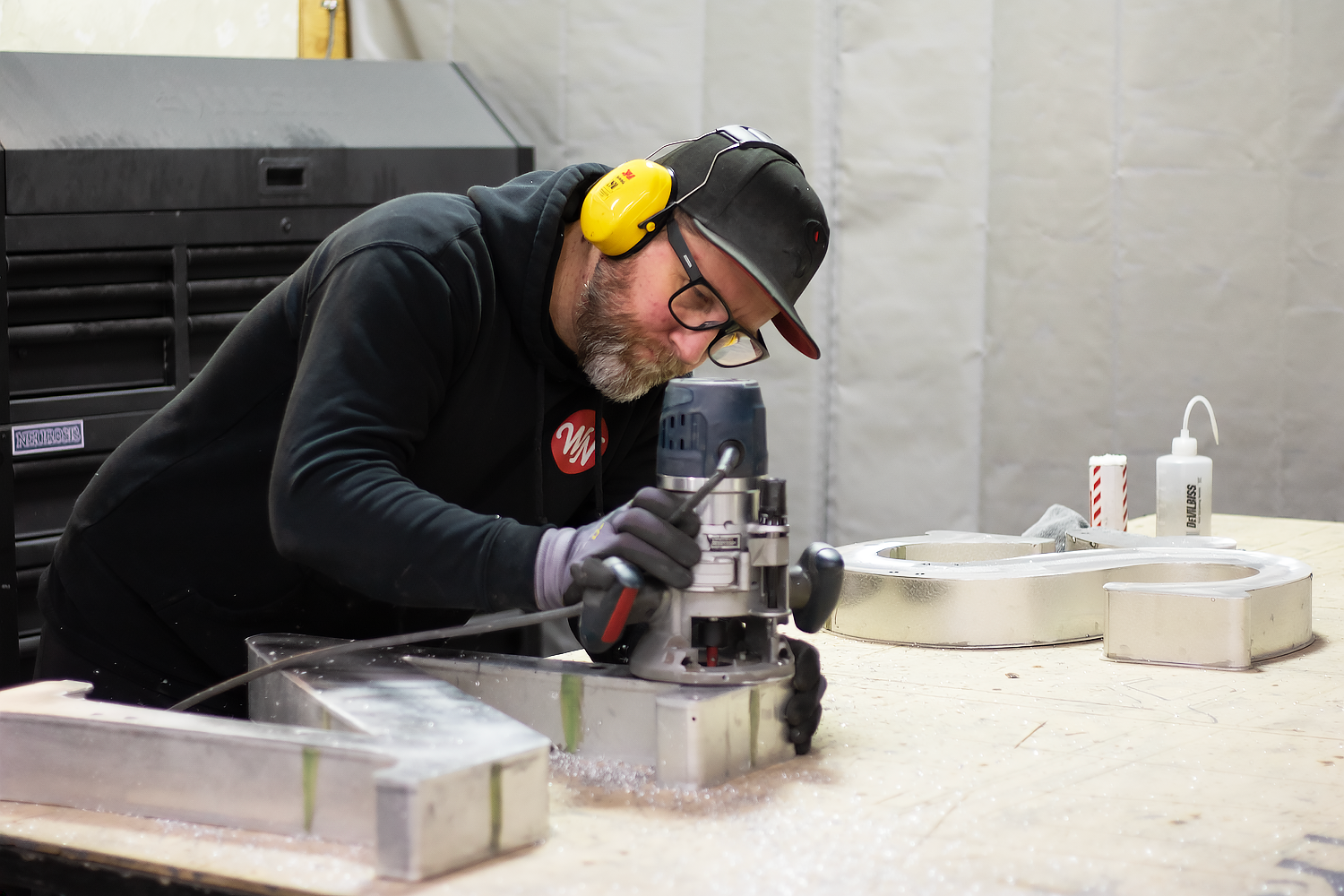
We hear it more than you'd think. And we get it — it's in the name. But Western Neon is a custom fabrication studio, and the range of what we build spans hand-bent neon tube to 40-foot interior neon systems to public art fabricated for a global audience. This month, we're pulling back the curtain on exterior illuminated signs — what they actually involve, how they get built, and what's possible when you treat the outside of a building as seriously as everything inside it.
We're starting with the World Cup.
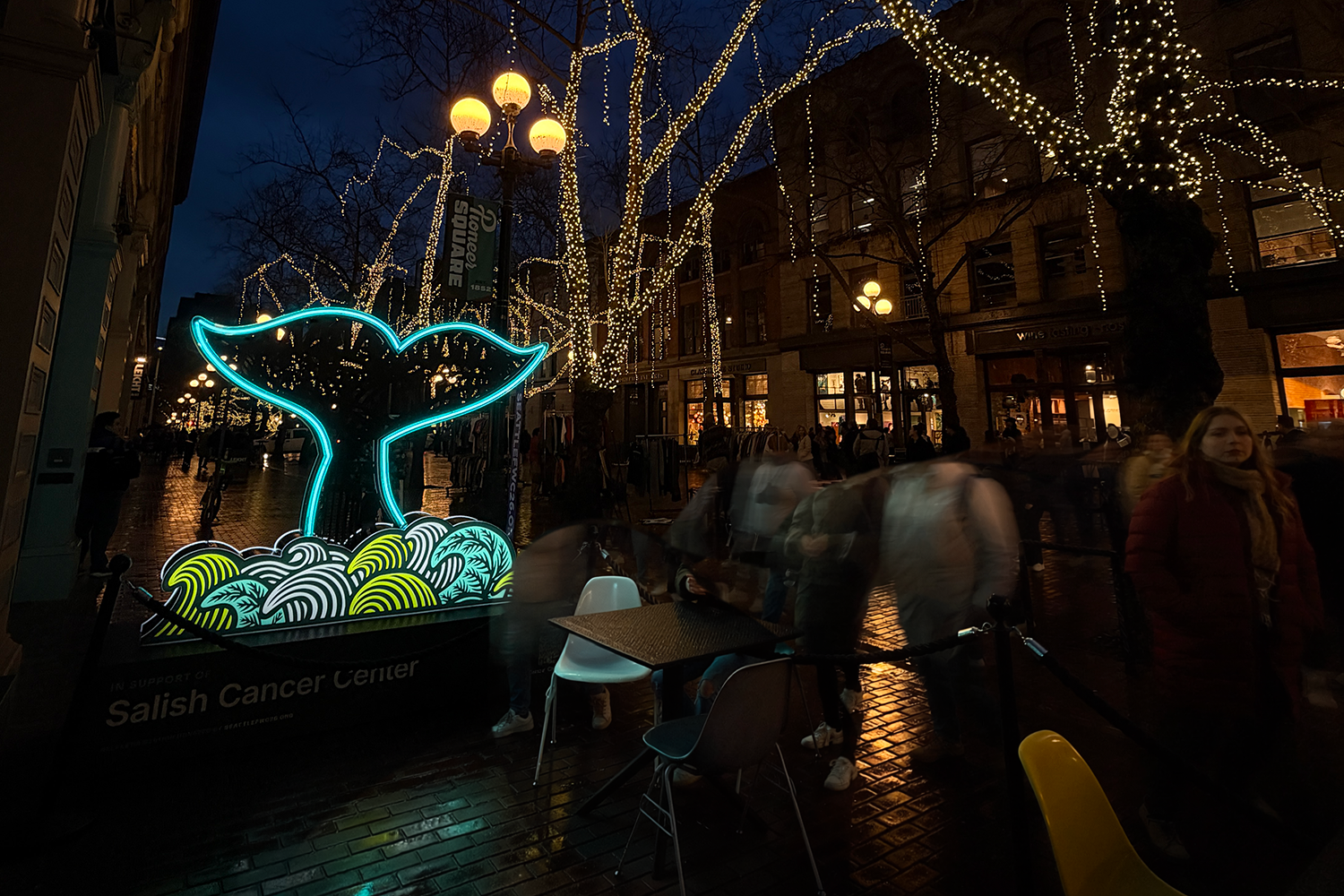
World Cup Campaign — Seattle FWC26 / Tireman Studio (2026)
This past spring, Seattle's streets, storefronts, and public spaces lit up with something new. Illuminated objects appeared in windows, on sidewalks, and in the ambient visual environment of neighborhoods across the city — hand-fabricated, neon-crowned, unmistakably unified. For anyone moving through Seattle during the World Cup, the presence was hard to miss and harder to ignore. That was the point.
Western Neon fabricated two distinct series of illuminated works for the FIFA World Cup 2026 Seattle host committee, in collaboration with local artist Shogo Ota of Tireman Studio. Shogo's design — a whale fluke image selected through a community process conducted in five languages with a panel of nine community leaders — became the visual identity for both series and the connective tissue of a citywide exterior light installation that no single building or sign could have achieved alone.
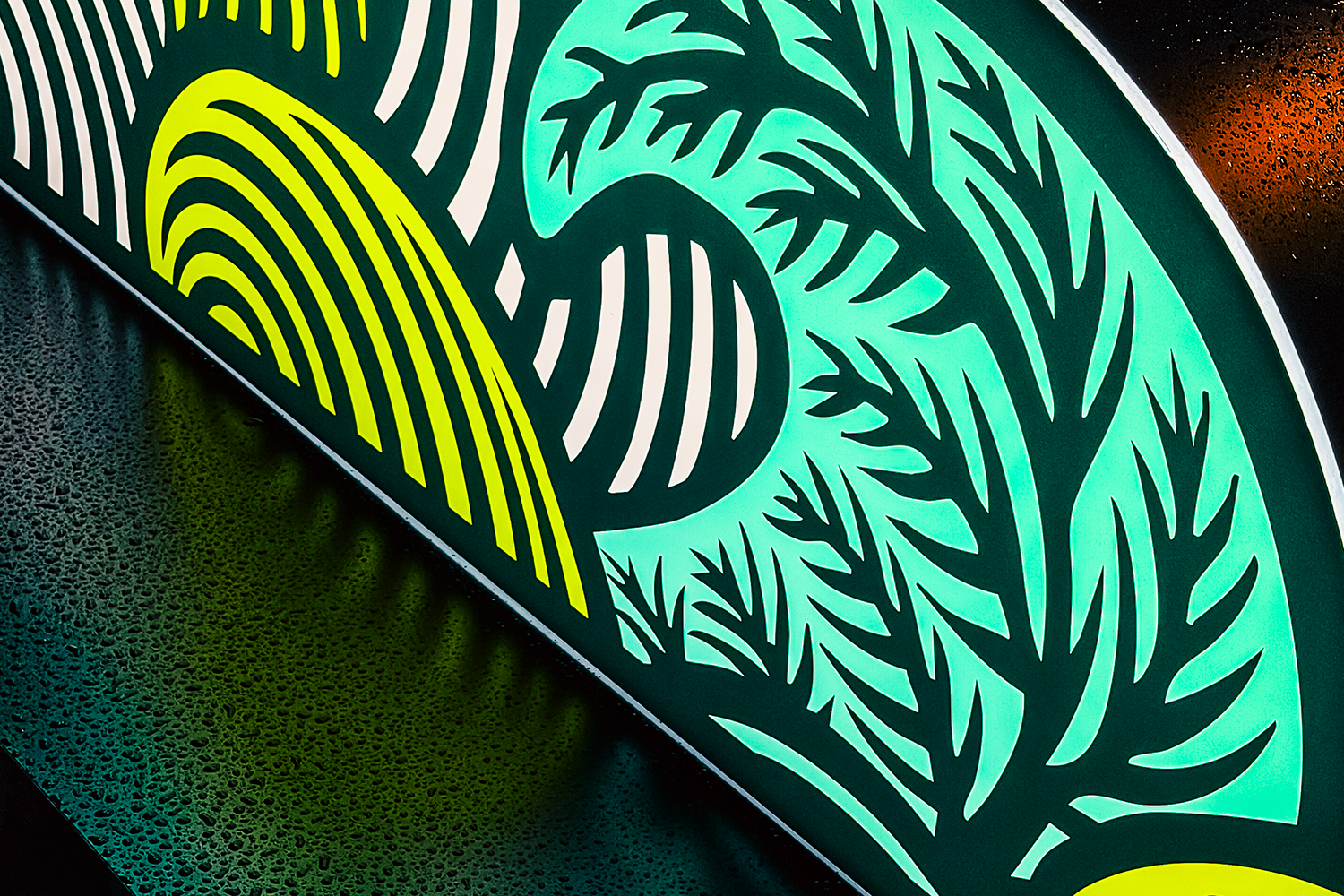
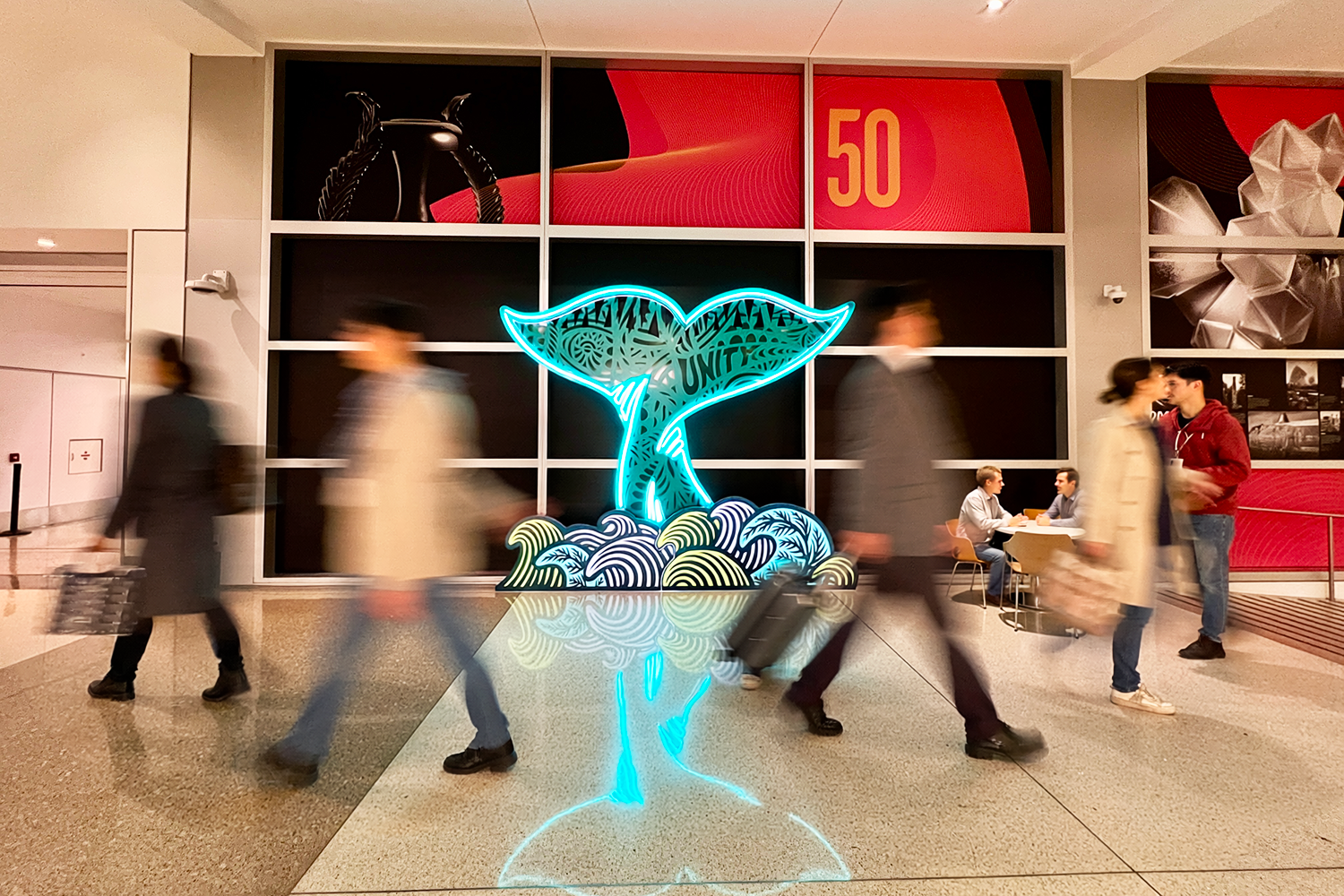
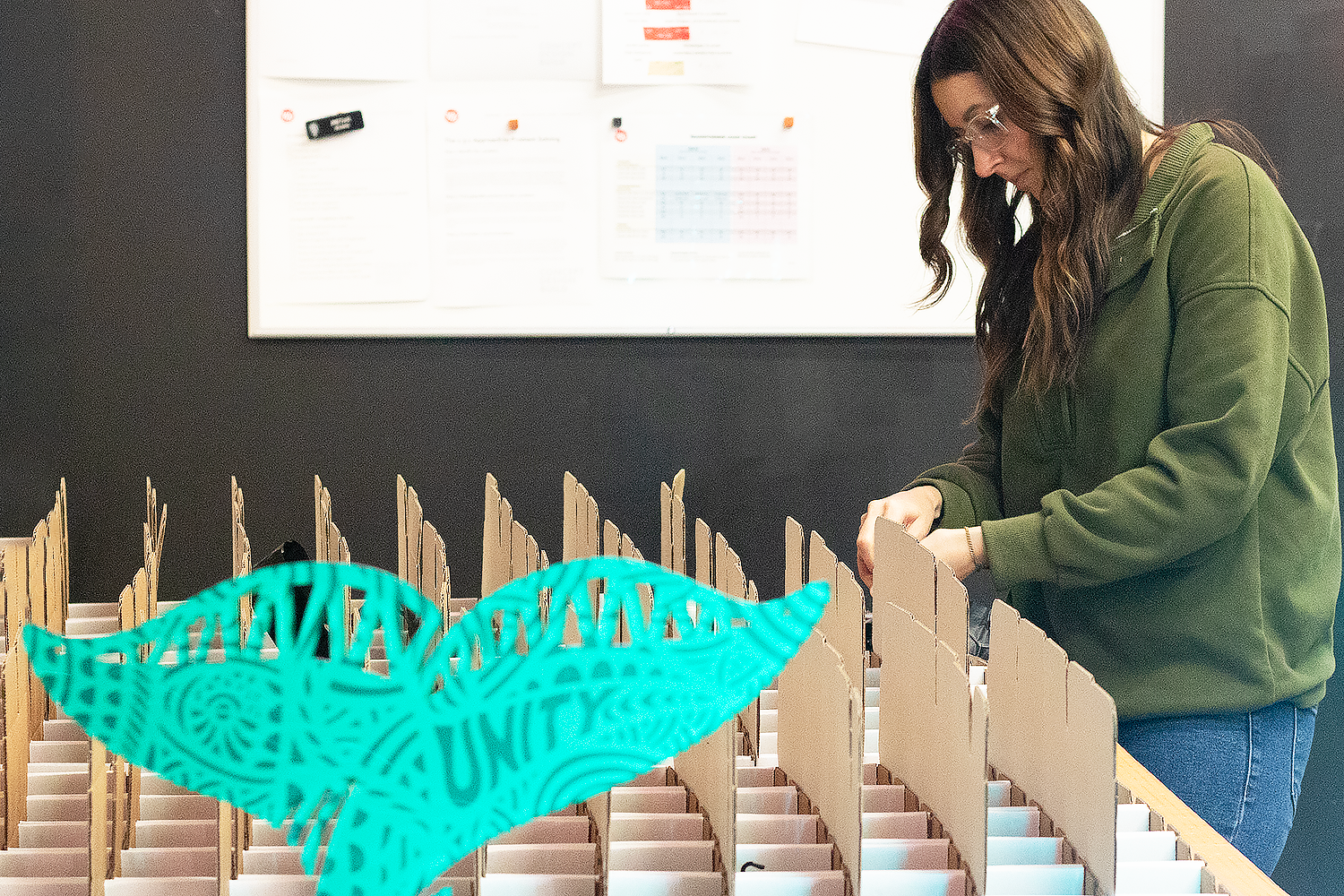
The first series was 26 Selfless Stations, built to mark the 2026 World Cup. Each station stands 96 inches tall, hand-fabricated from custom aluminum cabinets, internally illuminated with LEDs shining through digitally printed translucent colored vinyl, with a hand-bent 12mm Seacrest neon crown above a routed acrylic whale fluke panel finished with a digital print. At 96 inches, the Selfless Stations command street-level space the way a permanent exterior sign does — visible from across an intersection, readable at speed, present in the peripheral vision of anyone moving through the neighborhood. They functioned as public art, as fundraisers for community initiatives, and as anchors in Seattle's exterior landscape throughout the tournament. One station scaled even further: a 14-foot Selfless Station installed at SEA-TAC International Airport, where it met an audience of millions.
The second series was 527 Sea Beacons, built for collaborating partner businesses across the city. Each beacon measures approximately 17" x 14" and is fabricated from the same materials and by the same methods as the Selfless Stations — custom aluminum cabinet, LED illumination through digitally printed translucent vinyl, hand-bent neon crown, laser-cut acrylic panel with UV digital print. Placed in windows and spotlighted storefronts, the Sea Beacons extended the campaign into the street-facing layer of Seattle's retail and hospitality environment, shining outward toward pedestrians and creating a distributed network of light across the city's neighborhoods. The difference between a Selfless Station and a Sea Beacon is scale. The craft, the materials, and the fabrication process are identical.
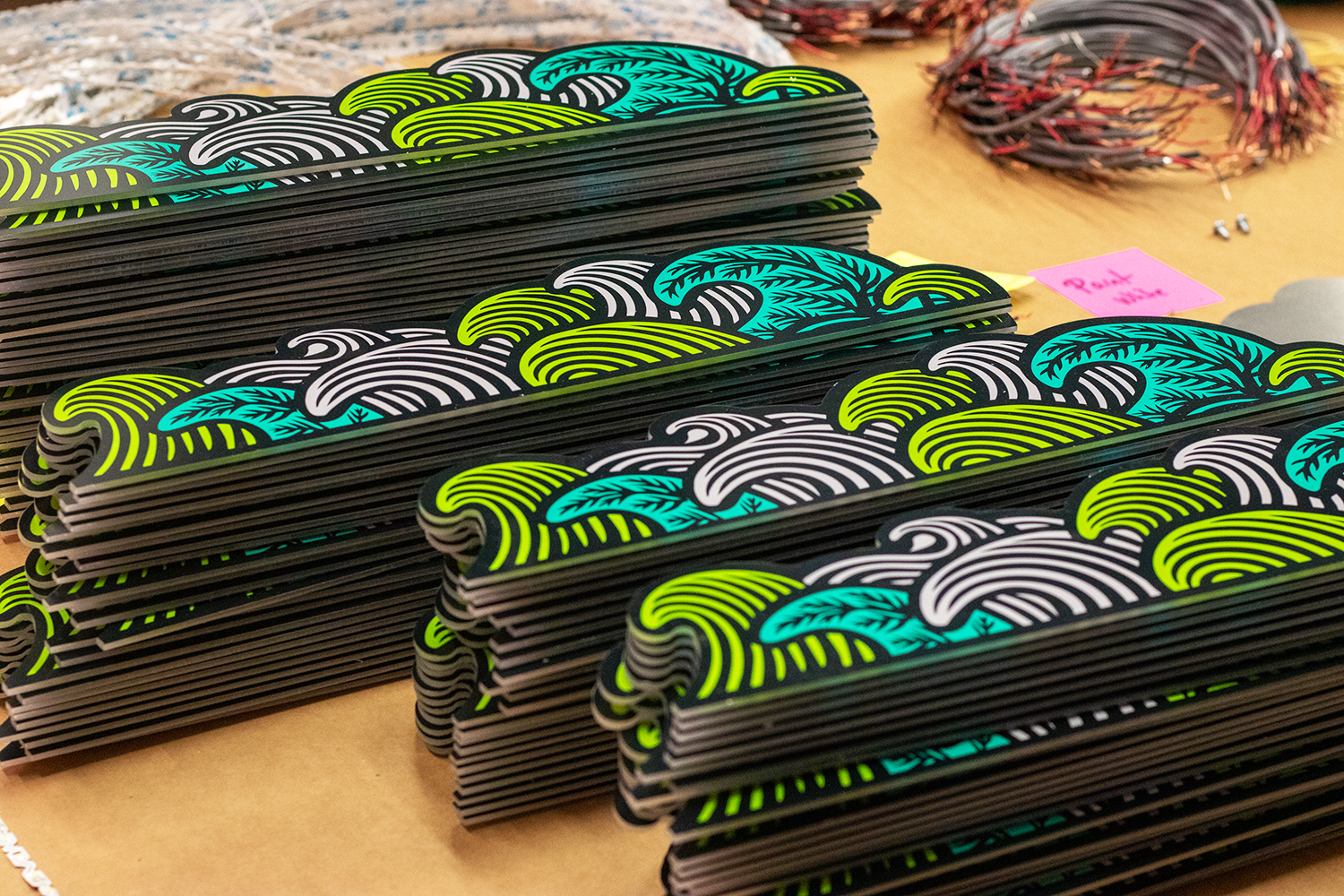
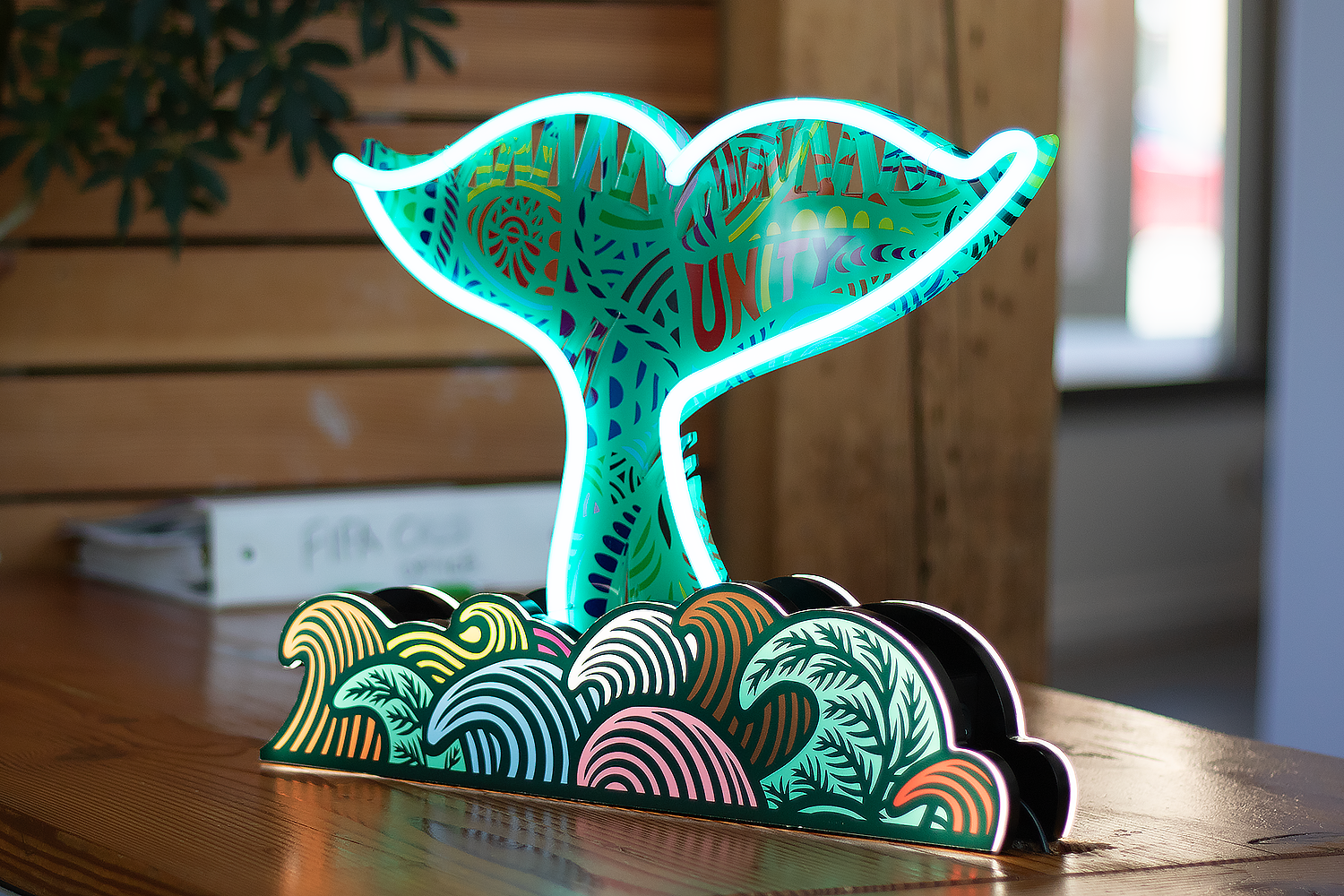
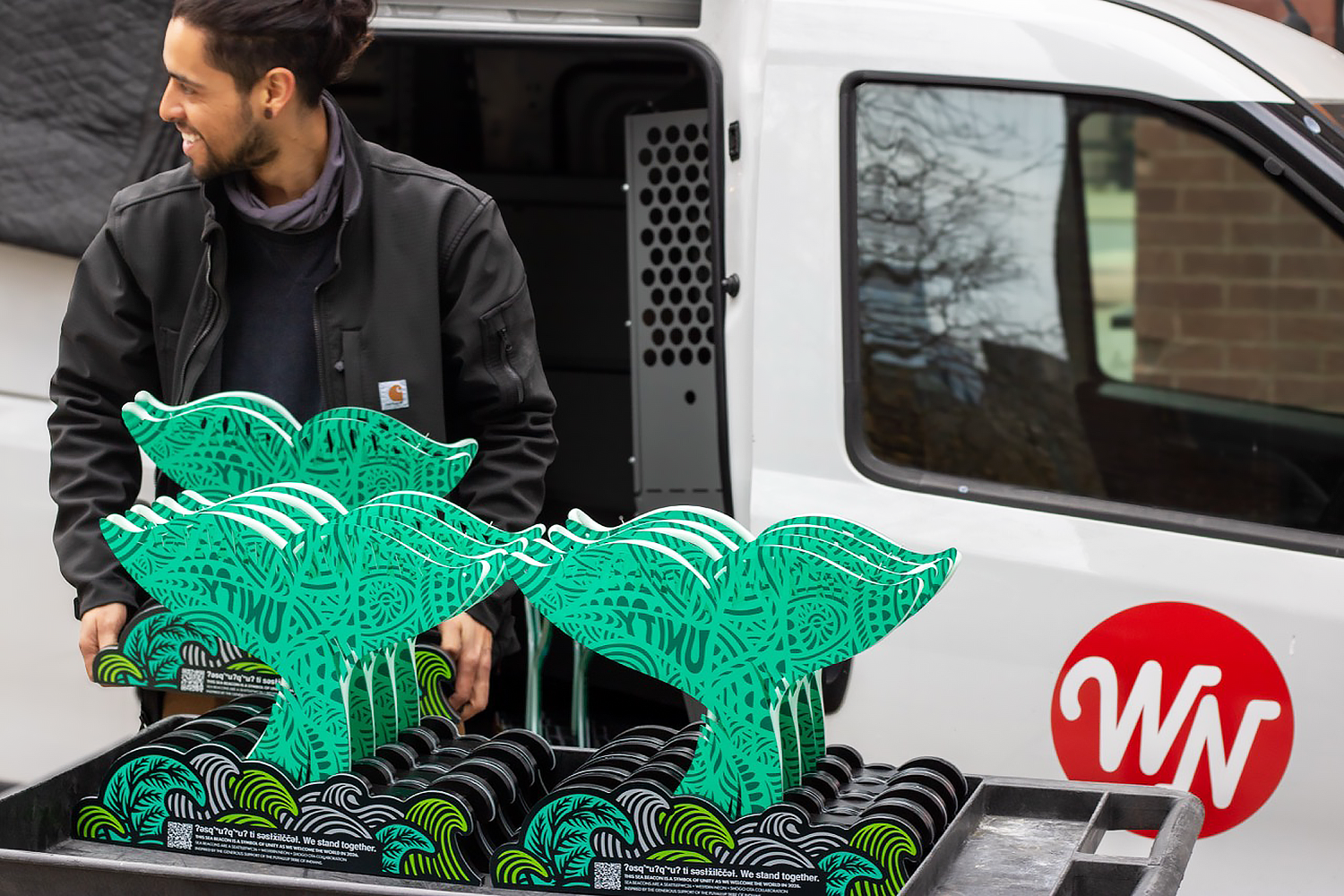
526 hand-fabricated illuminated objects, embedded in Seattle's exterior environment for the World Cup. That is fabrication at scale, and it draws directly on the same skills that go into a single illuminated sign on the front of a building. The materials are the same: aluminum, neon tube, LED, acrylic, vinyl. The precision is the same. Scale changes. Materials compound. The underlying process stays consistent.
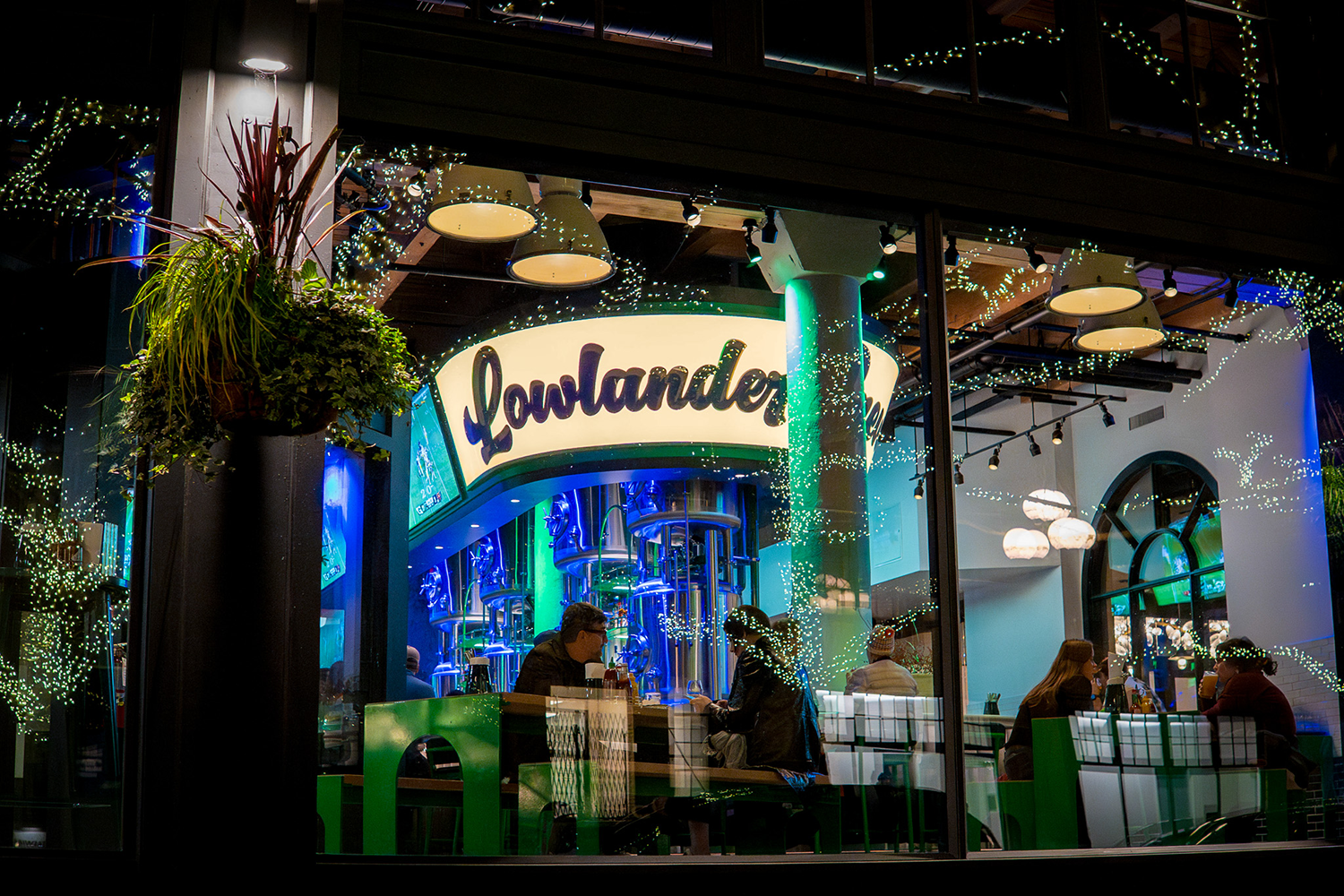
Lowlander Brewing — Pioneer Square, Seattle (2026)
When Dovetail Construction brought us in on Chef Renee Erickson's new Lowlander Brewing in Pioneer Square, the brief was interior illumination at the scale of the space — which meant building something that could hold its own against a full tank bar and 100 seats.
The centerpiece is a 24' x 3.5' custom curved, conical, horseshoe-shaped body, hand-fabricated to wrap around an existing soffit build. To be precise about what this object is: it hangs inside the building, but it functions as the exterior sign for Lowlander. It is the first thing you see from the street through the windows. It is the sign that tells you what this place is before you walk through the door. The decision to put the primary brand presence inside rather than mounted to the facade was architectural — the Pioneer Square building's historic exterior limited what could go on the outside — and the result is a sign that works harder than most exterior signs do, because it has to read through glass, at night, from across the street, in a neighborhood full of competing visual noise.
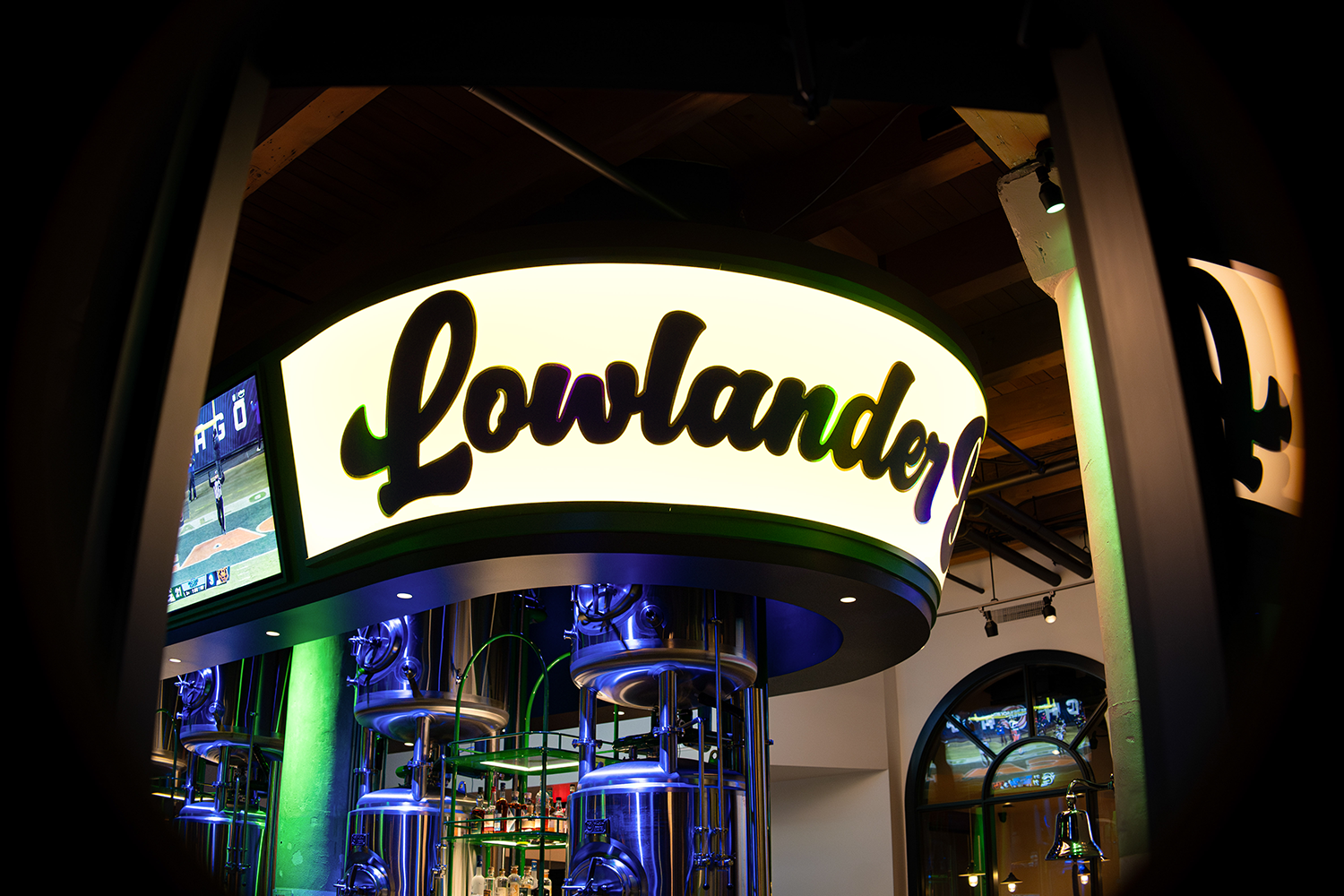
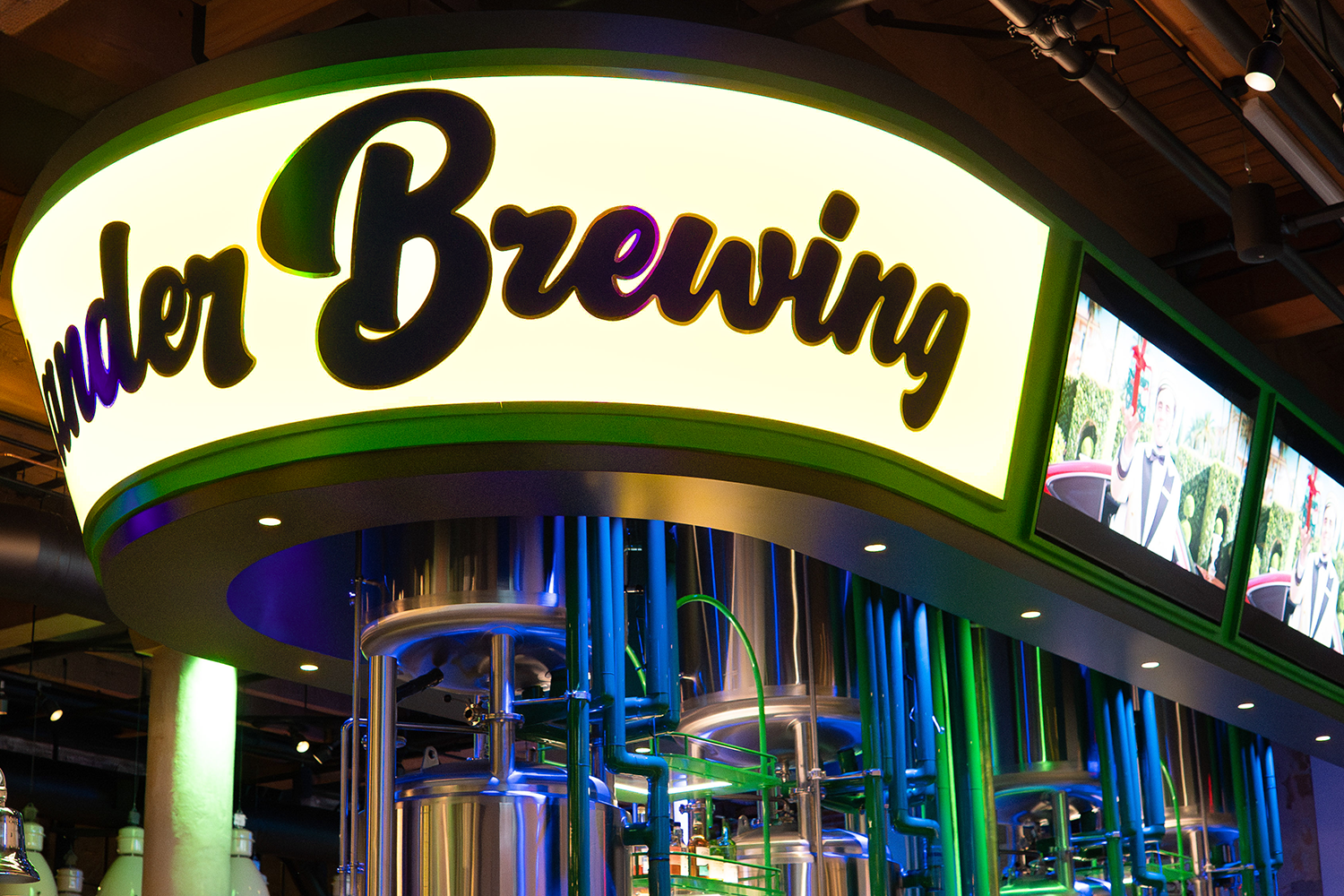
The face is clear polycarbonate with digitally printed translucent cream vinyl. Internal illumination comes from 3000K warm white LEDs. The hand-painted script is color-matched in blue and outlined in silver leaf, with a flex additive in the paint to allow the curved face to move during installation without cracking. Every material decision was made in service of how the piece reads from outside the building.
Lowlander occupies the former home of FX McRory's, one of North America's first modern sports bars, in a space now reimagined as one of the first tank bars in the nation — dispensing beer directly from the fermenters, paired with classic pub snacks, seating 100 guests indoors and out. The sign had to be at that level. It is.
PCC Community Markets — Pacific Northwest (Ongoing)
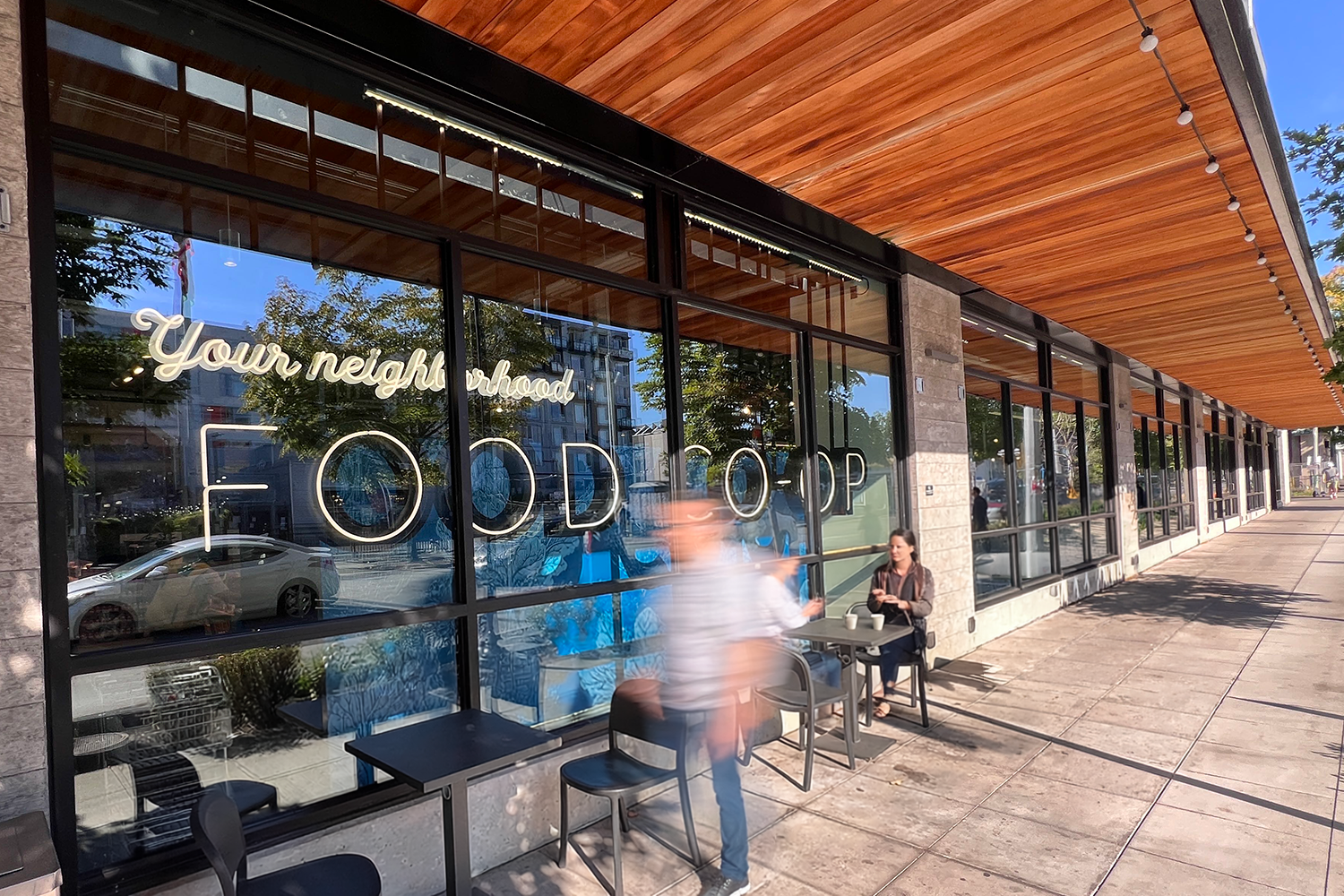
PCC Community Markets has built one of the most consistent and demanding signage programs in the Pacific Northwest, rooted in their commitment to the Living Building Challenge Petal Certification — the most rigorous green building standard globally. Western Neon has been a long-term fabrication partner across PCC's full store network, which now spans sixteen locations across Seattle and the broader region.
In Seattle, that includes Ballard, Central District, Columbia City, Downtown at Rainier Square, Fremont, Green Lake Aurora, Green Lake Village, View Ridge, and West Seattle. On the Eastside and regionally, Bellevue, Bothell, Burien, Edmonds, Issaquah, Kirkland, and Redmond. Across those sixteen stores, Western Neon has fabricated and installed signage that holds to a consistent material standard while adapting to the specific architecture, scale, and conditions of each location.
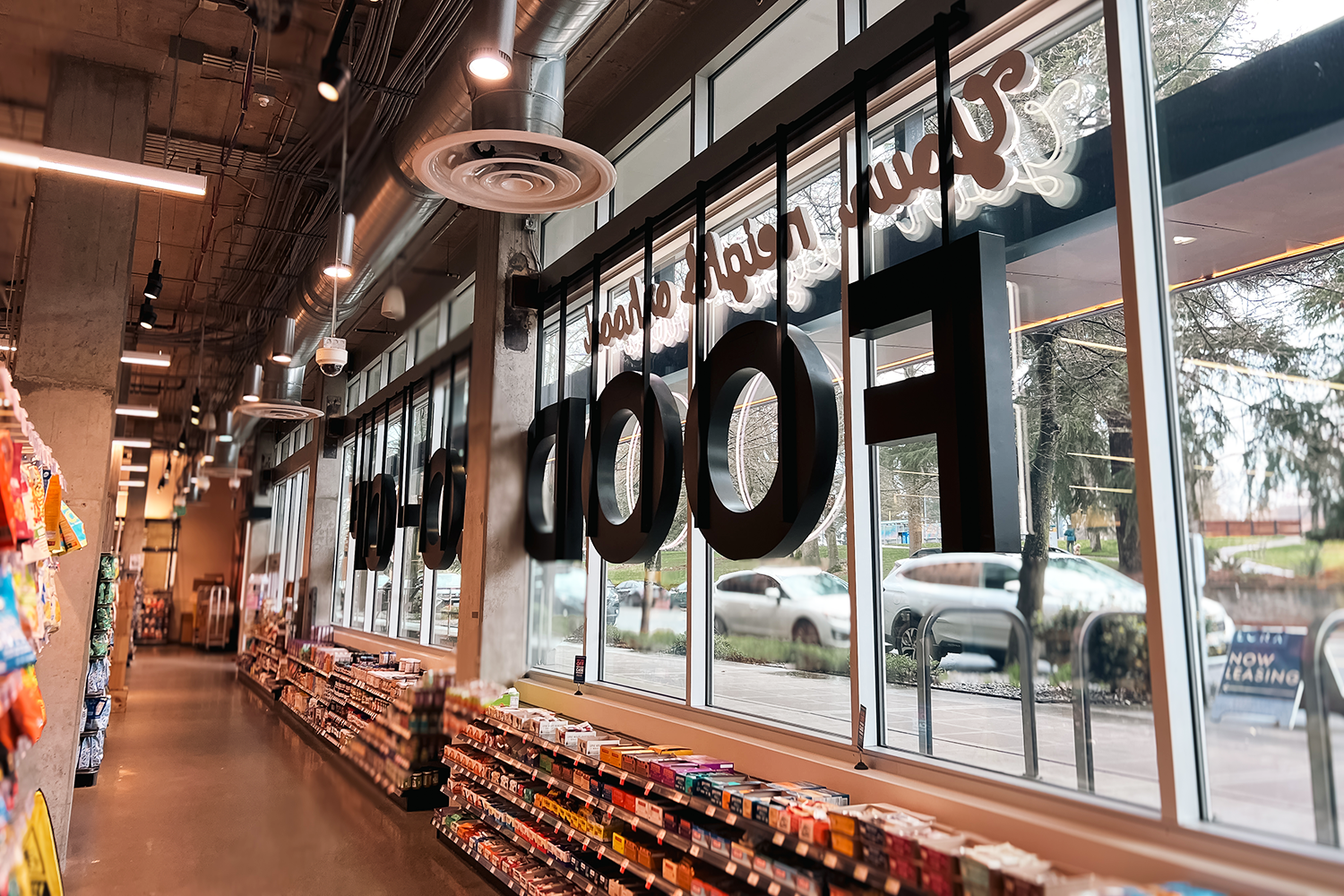
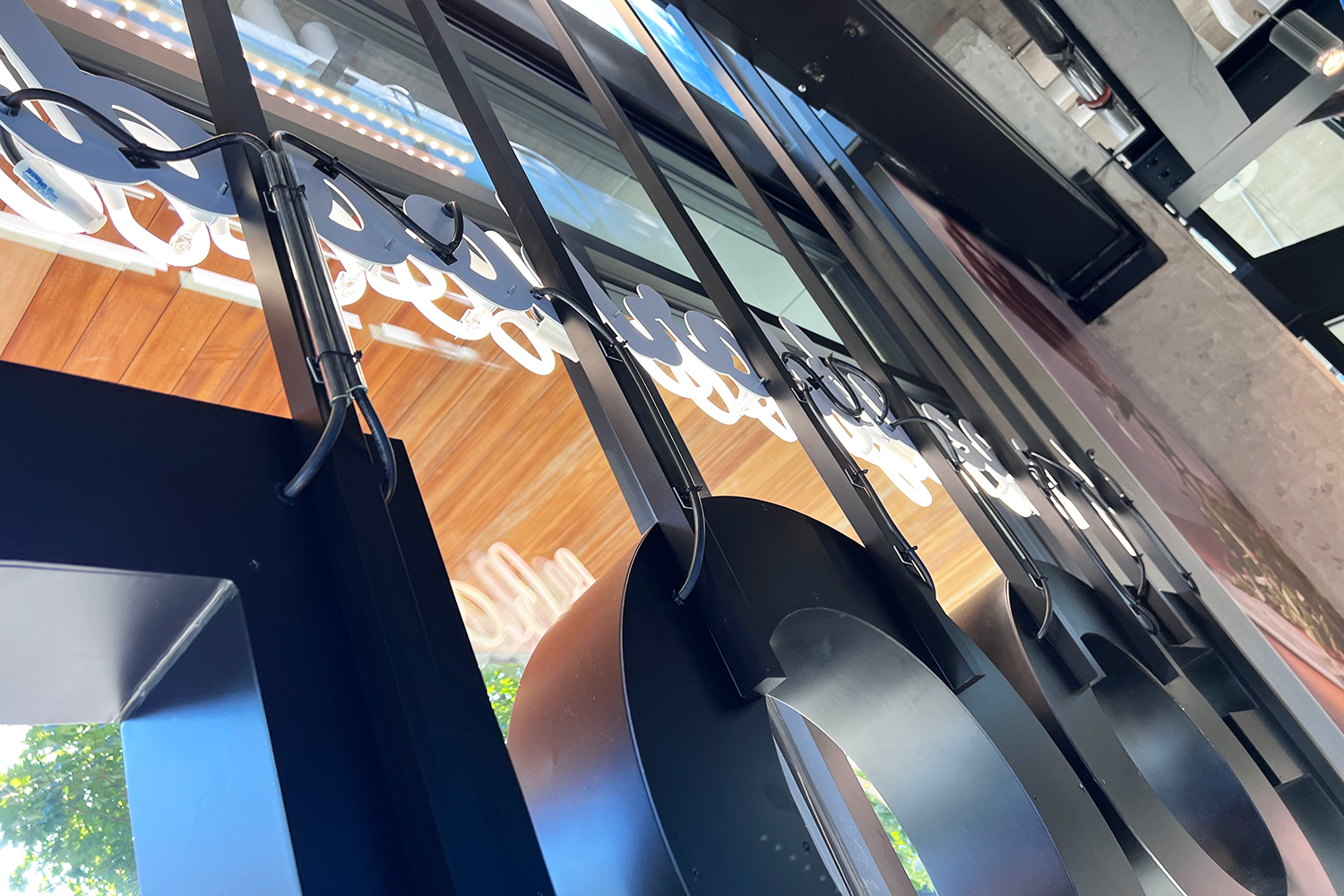
The West Seattle store includes one of the more technically specific pieces in that relationship: a 40-foot interior neon system built from fabricated aluminum letter cabinets in satin black, housing continuous 15mm 4500K white neon tubes. Like the Lowlander sign, this system lives inside the building — mounted to an interior wall — but its job is entirely exterior. It faces the street. It broadcasts through the glass. It is what a driver sees passing on California Avenue SW, what a pedestrian reads from the sidewalk, and what anchors the building's identity after dark. The depth of the cabinets was adjusted across the run to navigate architectural conditions including clearance around a concrete column, keeping the face plane consistent even as the structural conditions behind it changed — because when a sign's audience is outside, the tolerances on the visible face are the only tolerances that matter.
The full material toolkit across the PCC program covers reclaimed wood for décor and signage, LED lighting throughout, chemical-free finishes, and large-format printing on Neena Digiscape — a PVC-free, tear-resistant material — using latex inks free of solvents and hazardous air pollutants. Neon tubing is fully recyclable across every PCC location where it appears: the gas is extracted and reused, the glass is crushed and remelted, phosphor coatings are processed to reclaim usable elements, and metal electrodes are collected and recycled.
What the PCC relationship illustrates beyond any single project is what a long-term fabrication partnership looks like. Each new location draws on the material standards, design language, and fabrication methods established across every previous store. Western Neon carries that institutional knowledge from location to location, which means PCC's sixteenth store benefits from everything learned at their first.
It’s Never Been Just Neon
Every project in this post — a 96-inch street-level public art station, a 24-foot curved sign broadcasting through a Pioneer Square window, a 40-foot neon system facing California Avenue SW through plate glass, 500 beacons shining outward from storefronts across Seattle — is an exterior sign. The location of the cabinet, whether it's mounted to a facade or hanging inside a building, is a construction detail. What defines an exterior sign is its audience: the street. The sidewalk. The person in a moving car. The pedestrian at night. Every one of these projects was built to reach that audience, and every material and fabrication decision behind them was made in service of that single purpose.
That is what Western Neon does better than anyone. We're WN. We Know — and it's never been just neon.
Photography by Western Neon
Western Neon creates custom signage, interiors, and public art. With 40 years of experience, we make your vision a success from the first idea to the finishing touch. Start a project today!